ENERGY | WIRELESS | NANOTECH | MEMS | OPTICS | QUANTUM | 3D | CHIPS | ALGORITHMS

Wednesday, June 29, 2011

#MATERIALS: "Smartphone Materials Inspire Kyoto Prize Laureate"

The Kyoto Prize is the technology version of the Nobel Prize, awarded each year to three recipients in technology, basic science and philosophy/art. This year's recipient in advanced technology, National Institute of Technology scientist John Cahn, is estimated by NIST to be responsible for the development of more than 50 percent of the advanced materials in a modern smartphone.


Further Reading

Tuesday, June 28, 2011

#ENERGY: "Boosting efficiency may require 'cool factor'"

The Smart Energy Panel at the Freescale Technology Forum held here last week addressed the issue of smarter energy efficiency by asking its panelists to expound on the question: What is the biggest hurdle to action?


Smart Energy experts consisted of (from left): moderator Freescale's own senior vice president, Henri Richard, professor Brewster McCracken executive director of The Pecan Street Project, founder of KLD Energy Technologies, Christen Okonsky, Duke Energy director of advanced consumer technology Mike Rowand, and Jun Shimada, president and CEO of ThinkEco Inc.
Further Reading

#ALGORITHMS: "Enterprise App Stores Harness HTML5"


Software developers used to have to rewrite their apps for each platform they serve, duplicating their efforts for Apple's iOS, Google's Android, RIM's BlackBerry Playbook and Hewlett-Packard's webOS, but no more. Now, enterprise IT can provide universal HTML5 apps provisioned from cloud-computing resources to serve employees, regardless of platform. The application community is sidestepping mobile-device vendors' application stores by providing universal HTML5 applications that users can't tell from a normal application. After downloading, the HTML5 application remains in local cache memory even after the user goes offline. When harnessed by enterprise IT, these new universal HTML5 applications can be provisioned and managed using cloud-computing resources.
Further Reading

Monday, June 27, 2011

#SECURITY: "Blacklist Aims to Block Telecom Fraud"

The hacking/phreaking culture lures the brilliant and best to waste their talents on cyber-attacks that thumb their noses at civil society, or worse, perpetrate outright theft, prompting the formation of a community blacklist to restore order. While the bulk of the publicity on today's hacking/phreaking culture focuses on cyber-intrusions into online computers, a growing threat also comes from phreaking attacks on telecommunications systems where fraud not only inconveniences phone-system users, but also fleeces them financially. With technological solutions fighting a losing battle, 'community blacklisting' emerges as a necessary evil.

Humbug's Statistics Dashboard (top) provides analytics and reporting for voice networks including total calls, duration, average success rate (ASR), average call durations (ACD), cost summaries and caller leaderboards. Traffic Visualizations (bottom) of both inbound and outbound traffic use graphs and maps that can be zoomed-in on specific countries or phone numbers.
Further Reading

Friday, June 24, 2011

#ALGORITHMS: "Smarter Task-Transfers Use Mobile Cameras"


MIT and Google have devised a method of transferring tasks between your smartphone and your computer by merely pointing the cell-phone camera at your PC's screen. How many times have you found a Web page on your smartphone that you want open on your desktop computer? Or perhaps you were viewing your destination on Google Maps and want to transfer that to your smartphone. Using an experimental app called Deep Shot, you can do these things by merely aiming your smartphone's camera at your computer.
Further Reading

#MATERIALS: "NIST materials scientist awarded Kyoto Prize"


The Kyoto Prize winners this year include material scientists pioneer John Cahn, now an emeritus Fellow at the U.S. National Institute of Standards Technology (NIST). Cahn's numerous contributions to the science of metallurgical alloys--including the co-authorship of the seminal paper explaining quasicrysals--are widely used in semiconductors, robotics, medicine and transportation. The other two Kyoto Prize Laureates for 2011 include the winner in Basic Sciences, Rashid Sunyaev, a Russian astrophysicist with co-citizenship in Germany, who proposed the theory that fluctuations in cosmic microwave background radiation could be used to look back into time at the origins or our expanding universe. And in Arts and Philiosophy, this year's Kyoto Prize Laureate is Tamasaburo Bando V, a Japanese theater performer and Kabuki actor specializing in female roles, who has become world renowned a creator of elegant beauty that has influence many artistic genres. The Kyoto Prize Laureate will be officially honored in Japan on Nov. 9th, each receiving a 20-karat-gold medallion and $625,000. The ceremony and gala will be repeated in the U.S. in San Diego. Calif. on March 20-22, 2012.
Further Reading

Thursday, June 23, 2011

#ALGORITHMS: "Pizza Analytics Serves Bigger Slice of Pie"


Business analytics is not what many think of when ordering pizza, unless perhaps when using Papa Gino's mobile app to take advantage of personalized special offers, ready in 30 minutes. Papa Gino's, a New England pizza chain, has boosted its average order total while simultaneously upping the frequency of orders per customer by turning to real-time analytics. The analytics effort was done through a collaborative venture with QueBIT Consulting, a business partner of IBM.
Further Reading

Wednesday, June 22, 2011

#SECURITY: "Smarter Security Screening Hands-Free"


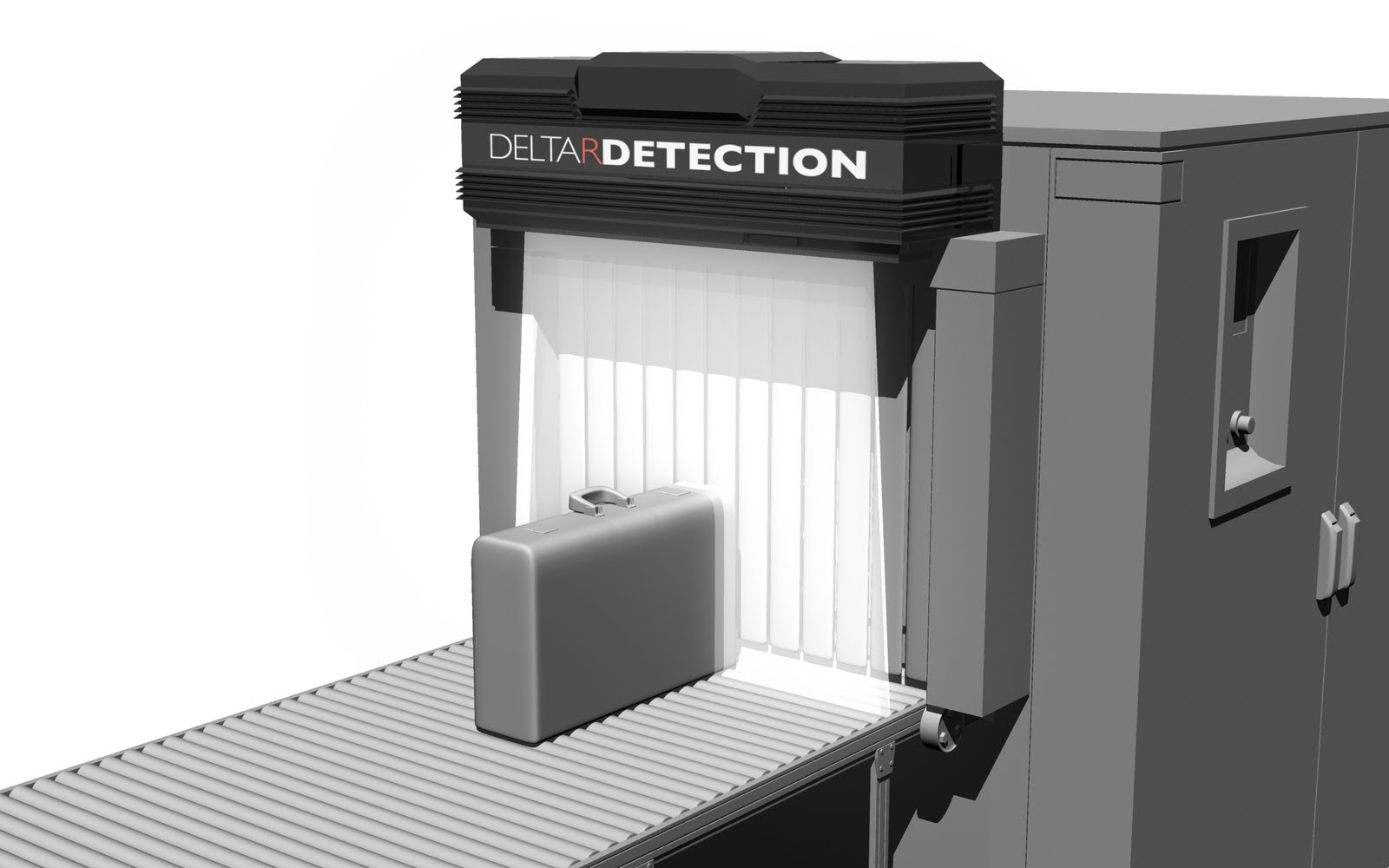
A smarter, yet relatively inexpensive, security screening technology requires no human intervention to detect explosives, according to its developers. Recall how psychedelic black lights make tiny particles glow that are invisible in normal illumination. Now researchers at the University of Florida have patented a similar method that automatically detects the tiniest traces of explosives using harmless UV (ultra-violet) lights similar to black lights.
Further Reading

#CHIPS: "Smart automotive controller cuts chip-count"


Freescale Semiconductor Inc. recent rolled out new automotive microcontrollers with integrated high-voltage capabilities for smarter motor-powered capabilities inside the cabin of automobiles. By extending its line of low-cost S12 16-bit microcontrollers, Freescale aims to woo automobile makers who want to make their vehicles smarter without adding to their cost. The S12 MagniV microcontrollers have integrated three functions—processor, analog front-ends for sensing and high-voltage actuation—into a single chip.
Further Reading

#MEMS: "Freescale rolls MEMS pressure sensor"


MEMS pressure sensors promise to be the next must-have component for smartphones and touchscreen tablets, because they impart the ability to determine altitude for next-generation location-based services—such as ascertaining what floor you are on in the mall—according to Freescale Semiconductor Inc., which announced a new low-cost Xtrinsic pressure sensor for consumer devices at the Freescale Technology Forum.
Further Reading

Tuesday, June 21, 2011

#ALGORITHMS: "Does Employee Training Increase Turnover?"

Enterprises often distinguish themselves by offering excellent training opportunities, thereby attracting the best applicants and creating the most productive employees. Unfortunately, a new study claims that employers may actually be increasing turnover by making their employees more qualified for job opportunities elsewhere.
Further Reading

Monday, June 20, 2011

#WIRELESS: "Smarter Sensor Nets Monitor Any Environment"


Wireless sensor networks originally designed to monitor data center server farms by IBM are being deployed in new environments where they repurpose software analytics and cloud computing capabilities to solve a wider array of societal problems. Wireless sensor networks, composed of nodes called “motes,” can monitor local environmental factors like temperature, humidity, barometric pressure and even corrosion, sending a constant stream of data to analytic software running on cloud computers. Originally developed to prevent maintenance headaches at data centers, IBM is now repurposing them to solve a variety of societal problems, such as preserving irreplaceable works of art.
Further Reading

#NANOTECH: "Nanotubes not toxic, researchers say"


Nanotubes may not be toxic, as previously reported elsewhere, according to the Semiconductor Research Corp. (SRC). Rather, contaminants mixed in during their manufacture should be credited with their adverse health effects, according to a University of Texas study funded by SRC.
Further Reading

Friday, June 17, 2011

#ALGORITHMS: "Smarter Implants Shielded From Cyber-Attack"


Medical implants today receive wirelessly transmitted instructions from physicians regarding how to dispense their therapy, opening them to cyber-attacks that could potentially be fatal. However, a novel shield technology could secure access to the implants by virtue of an add-on medallion worn by the patient."
Further Reading

Thursday, June 16, 2011

#CHIPS: "Smarter Cloud on-a-Chip Goes Green"


Intel is distributing a smarter experimental cloud computer on-a-chip to research organizations worldwide. Intel's prototype cloud computer on-a-chip makes smarter use of power, accounting for its recognition earlier this year by the German government, which awarded Intel the Innovation Prize for Climate and the Environment. Intel's single-chip cloud computer holds the promise of drastically cutting the power consumption of server farms at future data centers."
Further Reading

Wednesday, June 15, 2011

#MEMS: "GPS system with IMUs tracks first responders"


Tracking devices vendor TRX Systems Inc. last week unveiled a plan to enable people or things to be tracked with pinpoint accuracy regardless of whether they are outside, inside or in the presence of electronic jamming. Global Positioning System devices can help track first responders, unmanned areal vehicles, soldiers and expensive assets, but require an inertial measurement unit (IMU) to work when GPS-signals are unavailable, such as in tunnels, inside buildings, or when electronic interference is present.
Further Reading

Tuesday, June 14, 2011

#ALGORITHMS: "Smarter Building Management Cuts Costs"


Green buildings are not confined to new construction anymore. IBM recently unveiled its Intelligent Building Management software that applies analytics and automation algorithms to make any building new or old 'green.'
Aiming for smarter building management, IBM Intelligent Building Management software can cut power use by up to 40 percent as well as reduce buildings' maintenance costs by as much as 30 percent.
Further Reading

#CHIPS: "Analog realism, animation for every dashboard"


Freescale Semiconductor Inc. claims to have the world's first single-chip microcontroller capable of rendering analog automotive gauges, complete with 3-D shadows, as well as complex informatics such as iTunes-like 'cover flows.'"
Further Reading

Monday, June 13, 2011

#ALGORITHMS: "Cloud Computing Melding With Popular Apps - Smarter Strategies"


Mainstream software vendors are using the cloud-computing model to extend the capabilities of traditional desktop programs. Microsoft and Apple are not the only mega-corporations committing to cloud computing. The writing on the wall has also been perceived by Adobe Systems—maker of Photoshop, Flash, Acrobat and more than 100 other popular programs—which is quickly integrating cloud-based services.
Further Reading

#MEMS "FEI claims ion beam breakthrough for MEMS, 3-D ICs"


Semiconductor development has long depended on high-end focused ion beam (FIB) tools to cut cross-sections that reveal details views of advanced processes down to the nanoscale. However, these tools could take up to 12 hours to dissect the micron- and millimeter-scale features of MEMS chips and of 3-D stack chips, such as through-silicon vias (TSVs). Now, tool vendor FEI Co. claims to have reinvented the focused ion beam for 3-D ICs and MEMS.
Further Reading

#CHIPS: "Freescale, BMW team on 360-degree view"


Parking assistance systems that give drivers a 360-degree view of obstacles around them are currently only available on high-end models, but Freescale Semiconductor Inc.--working with engineers at BMW--claims to have created a technology capable of reducing the cost enough to make them standard equipment.
Further Reading

#CHIPS: "FEI claims ion beam breakthrough for MEMS, 3-D ICS"


Semiconductor development has long depended on high-end focused ion beam (FIB) tools to cut cross-sections that reveal details views of advanced processes down to the nanoscale. However, these tools could take up to 12 hours to dissect the micron- and millimeter-scale features of MEMS chips and of 3-D stack chips, such as through-silicon vias (TSVs). Now, tool vendor FEI Co. claims to have reinvented the focused ion beam for 3-D ICs and MEMS."
Further Reading

Friday, June 10, 2011

#WIRELESS: "Keeping Pace With the Exabytes of Medical Data"


The overwhelming abundance of health data is prompting the development of smarter health analytics integrated with cloud computing to quickly sift out the nuggets of knowledge that help patients.
Health data is growing at a rate of 35 percent per year, according to the Enterprise Strategy Group, creating an abundance of riches requiring smarter health analytics to mine the data overload. Already over 27 percent of doctors are using handheld electronic devices to access medical data in the clouds—a rate of adoption that is five-times greater than the general population. However, the cloud-based data they must analyze is growing even faster, estimated to reach as much as 14 exabytes (billion gigabytes) by 2015.
Further Reading

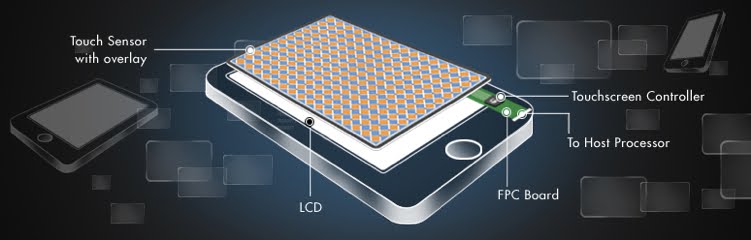
#WIRELESS: "Touchscreens being integrated inside LCDs"


Current touchscreens are add-ons that are overlaid atop a standard display, but display manufacturers  are gearing up to add touchpads inside the stack of standard LCD materials. Samsung and Nokia already have already integrated touch into the the OLED displays on their Galaxy S and N8 smartphones, respectively.
Further Reading

Thursday, June 09, 2011

#DISPLAYS: "Smarter Organics-Based Displays Provide Visual Realism"


Unparalleled visual realism is being created by smarter electronic displays using organics, as demonstrated by the new spherical mega-display in Japan. Just as organics are driving the development of future semiconductor microchips that can achieve feats not possible today—such as printing circuits on flexible plastic—organics are likewise creating unparalleled visual realism in displays. If you are in Japan this weekend, check out world's first large-scale organic display at the National Museum of Emerging Science and Innovation (Tokyo).

Further Reading

Wednesday, June 08, 2011

#WIRELESS: "$1 Trillion in Revenue for Mobile—Not Enough?"


Mobile network operators are creating a huge market, the size of which is matched by only a few other mega-industries. With revenue on track for $1 trillion within the next five years, analysts nevertheless predict it will not be enough for these companies to make a profit. Juniper Research recently predicted that mobile network operators will grow a trillion dollar business by 2016, but surprisingly, it also predicts that if spiraling costs are not reined in by then, mobile operators will be losing money!
Further Reading

Tuesday, June 07, 2011

#WIRELESS: "Smarter Apps Harness Dual Touch Screens"


Multipane apps are enabling a tablet-like experience on smartphones. This is done through touch-enabled functions that are activated from one touch screen, with results displayed on the other touch screen.
Multipane smartphones allow apps that ordinarily take over the entire screen to also spread out functions across dual touch screens, creating a tabletlike experience on dual screen smartphones. Sprint started the trend when it introducing the world's first dual touch-screen smartphone, Kyocera's Echo, whose second screen slides out on a patented hinge.


Apps can use both screens over-under like a tiny laptop--using the lower screen for a virtual keyboard and the top one as the display. Recently, Sony announced a similar dual touch-screen smartphone called the S2, whose two screens also make it resemble a tiny laptop.
Further Reading

#WIRELESS: "Touch mania swipes across markets"

Touchscreens have been available since the days of cathode-ray tubes, but the technology didn’t really catch on with consumers until mobile phone makers adopted it to solve the tiny-button problem. Now touchscreen smartphones and tablets collectively constitute the fastest-growing electronics market segment.

According to DisplaySearch (Santa Clara, Calif.), shipments of touchscreen tablets are forecast to reach 60 million units in 2011 and could top 260 million units by 2016. Add to that the more than 400 million mobile phone touchscreens predicted by IHS iSuppli Corp. (El Segundo, Calif.), and the total market could top $10 billion this year.

Further Reading

Monday, June 06, 2011

#MEMS: "Epson IMU melds precision, low-cost"


Epson Electronics America Inc. (EEA) aims to cash-in on a growing market for high-end inertial measurement units (IMUs) by cutting their cost by 50-fold with a high-precision model that combines the ultra-small size of micro-electro-mechanical systems (MEMS) with the ultra-low-power of piezoelectrics. Epson's IMU aspirations will be described this week at the Sensors Expo and Conference in Chicago.
Further Reading

Thursday, June 02, 2011

#OPTICS: "Nanoscale waveguide boosts silicon photonics"


The world's first 'truly nanoscale' silicon waveguide for integrated on-chip optical communications was recently claimed by Lawrence Berkeley National Laboratory. Based on its invention of a new type of quasi-particle called a hybrid plasmon polariton, Berkeley Lab's HPP sidesteps optical losses plaguing earlier attempts at silicon photonics with a new operating mode that makes the best of photonic and plasmonic systems—combining high quantum confinement with low signal loss, thus opening the door to the nanoscale on-chip lasers, quantum computing, and single-photon all-optical switches.
Further Reading

#ALGORITHMS: "Business Apps Line Shelves of Enterprise Stores"


One-stop shops that service all mobile operating systems can be leveraged by organizations to make approved apps for all platforms available to a company’s workers. Last year, Apple quietly let the enterprise begin opening their own company stores from which employees could download private-label applications. Now entrepreneurs are pursuing a vision of one-stop application stores for Android, iOS, Nokia, RIM BlackBerry and Windows Phones.
Further Reading