ENERGY | WIRELESS | NANOTECH | MEMS | OPTICS | QUANTUM | 3D | CHIPS | ALGORITHMS

Friday, June 10, 2011

#WIRELESS: "Touchscreens being integrated inside LCDs"


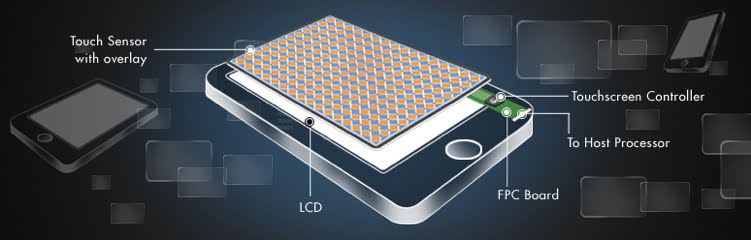
Current touchscreens are add-ons that are overlaid atop a standard display, but display manufacturers  are gearing up to add touchpads inside the stack of standard LCD materials. Samsung and Nokia already have already integrated touch into the the OLED displays on their Galaxy S and N8 smartphones, respectively.
Further Reading

Thursday, June 09, 2011

#DISPLAYS: "Smarter Organics-Based Displays Provide Visual Realism"


The world’s largest globe, covered with over 10,000 organic displays, hangs 60 feet above the lobby floor in Tokyo's National Museum of Emerging Science and Innovation. (Source: Mitsubishi)

Unparalleled visual realism is being created by smarter electronic displays using organics, as demonstrated by the new spherical mega-display in Japan. Just as organics are driving the development of future semiconductor microchips that can achieve feats not possible today—such as printing circuits on flexible plastic—organics are likewise creating unparalleled visual realism in displays. If you are in Japan this weekend, check out world's first large-scale organic display at the National Museum of Emerging Science and Innovation (Tokyo).

Just as organics are driving the development of future semiconductor microchips that can achieve feats not possible today—such as printing circuits on flexible plastic—organics are likewise creating unparalleled visual realism in displays. If you are in Japan this weekend, check out world's first large-scale organic display at the National Museum of Emerging Science and Innovation (Tokyo).
Today's screens are mostly flat, inorganic, liquid crystal displays, which offer excellent color and contrast—that is, until you compare them side-by-side with organic light-emitting diode displays. OLEDs are thinner and lighter than LCDs, can be deposited on flexible plastic substrates and can display almost perfect blacks, since they do not use backlights. Instead, they provide their own internal illumination for each pixel (which can be turned completely off for super-high contrast ratios).

OLEDs can also be viewed from almost any angle with very little change in luminosity and almost no color shift, making them perfect for large-scale displays in public places where people will be viewing them from nearly any angle.
The premiere example of OLEDs’ capabilities will be put on public display this weekend (June 11, 2011) at Tokyo's National Museum of Emerging Science and Innovation. At that time, the museum will unveil a 20-foot diameter spherical globe (suspended 60 feet above the lobby floor) whose OLED surface displays the entire Earth.

Crafted by Mitsubishi Electric Corp., the giant globe is covered with over 10,000 four-inch square OLED displays. Each display will be responsible for recreating the cloud cover, ocean and continents of a specific area of the Earth. The images will reply on satellite imagery processed using cloud-computing resources to provide updates on how the world looks to a viewer in space.

The unveiling of the new globe is part of the celebration of the 10th anniversary of the museum. It previously had a globe studded with inorganic LEDs, similar to many other large-scale displays worldwide. The realism of the new globe, however, will be unique, making it a fitting tribute to the now decade-old National Museum of Emerging Science and Innovation.

The globe was constructed atop an aluminum sphere, covered with 10,362 OLED panels, each measuring 96 by 96 millimeters. The smarter globe will present over 10 million pixels to viewers, which is about 10 times greater than the previous LED globe hanging there.

Today, the only examples of OLED displays for consumers are on small-scale screens, such as the Samsung Galaxy S smartphone. The problem with doing large-scale screens has been environmental contamination. Organic displays can fade like old newsprint when exposed to oxygen or moisture; this can be remedied by encasing them in glass, which works well for small displays. The globe at Tokyo's National Museum of Emerging Science and Innovation overcomes this problem by combining thousands of small glass-encased displays side-by-side.

Further Reading
Wednesday, June 08, 2011

#WIRELESS: "$1 Trillion in Revenue for Mobile—Not Enough?"


Mobile network operators are creating a huge market, the size of which is matched by only a few other mega-industries. With revenue on track for $1 trillion within the next five years, analysts nevertheless predict it will not be enough for these companies to make a profit. Juniper Research recently predicted that mobile network operators will grow a trillion dollar business by 2016, but surprisingly, it also predicts that if spiraling costs are not reined in by then, mobile operators will be losing money!

Called the "nightmare scenario" by Juniper Research, the surprising results come from extrapolating operator's growing costs as users are added worldwide.
In particular, as the user base expands, covering more and more territory, new methods must be found to cut network build-out as well as operating costs. Remedial action must be implemented over the next four years to head off the shortfall.
The usual suspects are to blame, according to the report, in particular the falling average revenue per user, which is conspiring with slowing growth due to local market saturation. As a result, revenue is expected to flatten over the next few years at the same time that smartphone users are creating increasingly more data traffic. That data traffic, which already doubled in 2010, will increase by more than 13 times over the next four years reaching a grand total of 25 exabytes (25 billion gigabytes) by 2015.

To meet users expectations for faster speeds for transferring all that data, the mobile network operators will need to dramatically increase their backhaul bandwidth—which costs a bundle—resulting in shrinking profits unless measures are taken now.
The light at the end of the tunnel for the large operators, unfortunately, will not be generated by next-generation technologies. But there is one exception. The one next-generation technology that Juniper Research cites as a good candidate for drastically cutting costs is offloading data channels of video content by developing Integrated Mobile Broadcast. IMB makes use of neglected TDD (time-division duplex) channels that today are underutilized by operators. Using TDD channels for broadcast video could offload data channels, thus reducing both operating costs and decreased backhaul needs.

One interesting side note in the report is that smaller mobile-network operators may in fact be better off, since they should be able to gain a competitive advantage by retaining the flat-rate data bundles that the larger operators can no longer afford to offer.
Further Reading

Tuesday, June 07, 2011

#WIRELESS: "Smarter Apps Harness Dual Touch Screens"


Multipane apps are enabling a tablet-like experience on smartphones. This is done through touch-enabled functions that are activated from one touch screen, with results displayed on the other touch screen.
Multipane smartphones allow apps that ordinarily take over the entire screen to also spread out functions across dual touch screens, creating a tabletlike experience on dual screen smartphones. Sprint started the trend when it introducing the world's first dual touch-screen smartphone, Kyocera's Echo, whose second screen slides out on a patented hinge.


Apps can use both screens over-under like a tiny laptop--using the lower screen for a virtual keyboard and the top one as the display. Recently, Sony announced a similar dual touch-screen smartphone called the S2, whose two screens also make it resemble a tiny laptop.

Software developers were already faced with rewriting their apps designed for single portrait-oriented displays to take full advantage of the landscape-orientation of tablets (for example, iPad/Galaxy Tab). Now in addition to smartphone and tablet versions, software developers are being asked to retool their apps for dual touch-screen smartphones, too.

One solution, however, makes the best of both worlds--smartphone and tablet--and is now being taken advantage of by app developers who orient the Echo's two screens side by side. So far, 30 apps have been specifically customized for Echo's dual display, mostly using the over-under orientation with the virtual keyboard on the bottom. Most gaming developers have gone with the over-under orientation, putting their specialized control surfaces on the bottom screen and the arena on the top screen.

A third choice, however, is to recreate the tablet experience on a dual-screen smartphone by spreading out the functions of a tablet over both screens. By using a side-by-side format, Metago's Astro File Manager will debut in a dual touch-screen version next month--re-creating a tablet experience on a smartphone.

"You get the best of both worlds," said Metago founder Kevin Payne. "We were already developing a tablet version of the Astro File Manager that featured a new control panel alongside our traditional directory panel, so for Kyocera's Echo we took advantage of their side-by-side screens to re-create that tabletlike mode."

Metago’s Astro File Manager is one of the most popular apps for Android, with more than 11 million downloads and counting at a rate of about 25,000 per day. Using a traditional directory view, the Astro File Manager is both an applications manager, a task manager and an SD Card manager, permitting users to browse, search and preview both text and image files. Toolbars and button-activated functions extract archives, create shortcuts, bookmark items and connect to PCs, file servers, cloud services and other mobile devices using Bluetooth and many other network protocols.

For the future, Metago plans to release a suite of related business apps designed for routine daily usage, including device management services and backup support.

#WIRELESS: "Touch mania swipes across markets"

Touchscreens have been available since the days of cathode-ray tubes, but the technology didn’t really catch on with consumers until mobile phone makers adopted it to solve the tiny-button problem. Now touchscreen smartphones and tablets collectively constitute the fastest-growing electronics market segment.

According to DisplaySearch (Santa Clara, Calif.), shipments of touchscreen tablets are forecast to reach 60 million units in 2011 and could top 260 million units by 2016. Add to that the more than 400 million mobile phone touchscreens predicted by IHS iSuppli Corp. (El Segundo, Calif.), and the total market could top $10 billion this year.

Further Reading

Monday, June 06, 2011

#MEMS: "Epson IMU melds precision, low-cost"


Epson Electronics America Inc. (EEA) aims to cash-in on a growing market for high-end inertial measurement units (IMUs) by cutting their cost by 50-fold with a high-precision model that combines the ultra-small size of micro-electro-mechanical systems (MEMS) with the ultra-low-power of piezoelectrics. Epson's IMU aspirations will be described this week at the Sensors Expo and Conference in Chicago.
Further Reading

Thursday, June 02, 2011

#OPTICS: "Nanoscale waveguide boosts silicon photonics"


The world's first 'truly nanoscale' silicon waveguide for integrated on-chip optical communications was recently claimed by Lawrence Berkeley National Laboratory. Based on its invention of a new type of quasi-particle called a hybrid plasmon polariton, Berkeley Lab's HPP sidesteps optical losses plaguing earlier attempts at silicon photonics with a new operating mode that makes the best of photonic and plasmonic systems—combining high quantum confinement with low signal loss, thus opening the door to the nanoscale on-chip lasers, quantum computing, and single-photon all-optical switches.
Further Reading

#ALGORITHMS: "Business Apps Line Shelves of Enterprise Stores"


One-stop shops that service all mobile operating systems can be leveraged by organizations to make approved apps for all platforms available to a company’s workers. Last year, Apple quietly let the enterprise begin opening their own company stores from which employees could download private-label applications. Now entrepreneurs are pursuing a vision of one-stop application stores for Android, iOS, Nokia, RIM BlackBerry and Windows Phones.

Today, users in pursuit of applications visit either Apple's iTunes App Store, Google's Android Market, Nokia's Ovi, RIM's BlackBerry App World or Microsoft's Windows Phone Marketplace, depending on the make of their smartphone. Each of these services allows users of their smartphones to download applications—which are growing by the thousands monthly. Often without a smartphone of the right brand, it is difficult to even browse available applications. And for corporate users trying to decide which smartphone to buy, comparing one smartphone’s available applications to another’s is almost impossible.

The problem is more acute for so-called "company stores," where corporate IT would like to provision house-designed applications alongside third-party and built-in applications so that employees have a single portal where they can browse IT-approved and provided applications regardless of the user's smartphone operating system.
Google Apps Marketplace and SalesForce's AppExchange solve some of these problems, but a new service was recently unveiled by Partnerpedia that claims to provide a complete solution for one-stop application stores serving corporate IT customers.
"Organizations need solutions that can bridge the needs of IT while satisfying requirements from end users," said Mark Sochan, CEO of Partnerpedia, which allows IT to "maintain corporate policies and procedures while reducing support costs, all the while enabling end users to be as productive as possible."

Partnerpedia, which cites a Strategy Analytics report claiming that 61 percent of U.S. corporations now support employee tablets, offers enterprises their own private-brand application store. This approach gives IT full control over the licensing, distribution, installation and management of applications on end-user devices.
Called the EAS (Enterprise App Store), it can house applications written internally at an enterprise as well as offer the IT-approved applications from third parties all in a one-stop application store. The private-branded Enterprise App Store today can house both Android and iOS apps side-by-side, and is currently being expanded to cover the other popular smartphone operating systems.

By focusing on IT concerns regarding security, control, management and maintenance, the Partnerpedia Enterprise App Store coordinated distribution of internal developed applications at the enterprise as well as approved third-party applications from independent software vendors. EAS submits both to the same approved corporate policies and procedures, thus reducing IT support costs while offering users a uniform comprehensive experience.

Enterprise App Stores use Partnerpedia's private-label cloud service to manage user license management, application provisioning and decommissioning, remote installation of updates, code signing, ratings and recommendations. Enterprise App Stores also enlist partnership among enterprises for enablement, collaboration and go-to-market solutions.
Further Reading