ENERGY | WIRELESS | NANOTECH | MEMS | OPTICS | QUANTUM | 3D | CHIPS | ALGORITHMS

Wednesday, July 13, 2011

#WIRELESS: "Smart Monitors Benefit from RF Energy Harvesting"


Georgia Tech professor Manos Tentzeris holds a sensor (left) and an ultra-broadband spiral antenna for wearable energy-scavenging applications, both of which were inkjet printed on paper. (Source: Georgia Tech)

Radio-frequency energy from television, AM, FM, cellular, WiFi, WiMax, Long-Term Evolution and more can now be harvested to power smarter electronic devices for security, environmental sensing, structural monitoring (bridges/buildings), food spoilage and wearable bio-monitoring devices. Much has been made of the radio-frequency waves saturating every cubic inch of air in developed nations, and especially in metropolitan centers where television, AM, FM, cellular, WiFi, WiMax, Long-Term Evolution and scientific/medical sub-bands compete. One research group at the Georgia Institute of Technology (Atlanta), however, sees RF saturation not as a potential health problem, but as an opportunity to scavenge power directly from the air.

Harvesting RF energy from the air and converting it into usable power for smarter electronic devices could enable always-on security devices that work even during power outages, environmental and structural sensors that do not require batteries, food-preparation sensors that monitor spoilage inside containers, and wearable biological sensors that can transmit vital signs to emergency responders even when the person wearing them is unconscious.

Other groups have demonstrated the ability to harvest ambient RF power using relatively expensive antennas tuned to specific frequencies, but Georgia Tech researchers now claim to have created a cheap ultra-wideband antenna technology that can scavenge a wide swath of frequencies simultaneously and allows their energy-harvesting devices to generate much more power than earlier attempts.
"Using an ultra-wideband antenna that lets us exploit a variety of signals in different frequency ranges is giving us greatly increased power-gathering capability," said Manos Tentzeris, a professor at Georgia Tech.

Since 2006, Tentzeris and colleagues have been experimenting with antenna-based energy-scavenging devices, but only in relatively narrow bands. Now, the team claims to have created ultra-wideband antennas and sensors that can be printed on paper or clear polymers using conductive inks with embedded silver nanoparticles, making their energy-harvesting technology commercially feasible.

In demonstrations, Tentzeris' team has created self-powered sensors for chemical, biological, heat and stress applications. The team has also created ultra-cheap RFID (radio-frequency identification) tags using their techniques, which could be used in manufacturing, shipping and for monitoring communications and power usage.

The system works by first converting alternating RF signals in to direct current that charges either a super-capacitor or a battery, which typically saves up enough energy to power on a device. Only microWatts of power can be generated in real time from a single RF frequency, but by using these new ultra-wideband antennas, milliwatts of power can be produced, enabling some low-power devices to be run directly. Eventually, the team hopes to power devices requiring as much as 50 milliwatts.
Funding was provided by the National Science Foundation, the Federal Highway Administration and Japan’s New Energy and Industrial Technology Development Organization.

Further Reading

#ALGORITHMS: "Apple Spin-Off Hosts Enterprise App Stores"


Apperian hosts app stores for Cisco, Procter & Gamble, Estee Lauder and other corporations that take advantage of this Apple spin-off's ultra-secure cloud-based provisioning service for employer-written private-label apps like those shown here.

Since Apple announced its over-the-air protocol last year, enterprises from Cisco to Procter & Gamble have quietly opened their own private-label app stores, with the help of behind-the-scenes Apple spin-off Apperian.

Apple's over-the-air protocol enables any enterprise to bypass iTunes and create its own private-label application store, with complete IT control of provisioning, with Apple spin-off Apperian Inc. providing the necessary cloud-based hosting services.

Apperian was spun off with Apple's blessing by its former head of enterprise services, Chuck Goldman, in 2009. With the release of Apple's over-the-air protocol in 2010, Apperian began hosting private-label application stores on its own cloud computers for any enterprise.

Unlike Antenna's HTML5 applications managed by its Volt-client and Antenna's Mobility Platform, the Apperian Client is the first native application to enable enterprises to create their own iTunes-like application store experience for their employees.

"Apperian's business model is to support pure native iOS apps--and soon Android too--which are developed not by us, but by our enterprise customers, and which we house is a cloud-based app store that employees can browse just like they do the iTunes app store," said Apperian CEO David Patrick.

Apperian's cloud platform, called EASE (Enterprise App Services Environment), runs as SaaS (software as a service) to deploy applications created by enterprises for employees on their smartphones and tablets. All the applications are under the control of the enterprise. IT managers use a dashboard to provision and track usage based on specific employee needs. Employees sign onto and authenticate at the company application store, located in Apperian's Ease cloud, then choose from among the applications that IT has authorized them to access. IT managers use Ease analytics to produce reports on usage and trends. An Apperian supplied software development kit and application templates simplify application development efforts for enterprise IT departments.

Apperian recently got the attention of Wall Street when its business model was endorsed by North Bridge Venture Partners, Bessemer Venture Partners and Kleiner Perkins' Caufield & Byers' iFund, which together put up $9.5 million to supplement Apperian's prior seed funding from CommonAngels and LaunchCapital. The endorsement of the venture capital leaders virtually ensures Apperian's deeper penetration into Fortune 500 companies wanting to open their own private-label application stores. Apperian customers already include Procter & Gamble, Dupont, AAA, Intuit, Estee Lauder, NetApp, the Mitre Corporation, and the world's largest enterprise application store, Cisco's App Fridge (for cool enterprise applications).

Further Reading: URL

#ROBOTICS: "Robots get Kinect's 'eyes and ears'"


Microsoft Robotics has been giving away its free Robotics Developer Studio, complete with a 3D simulator, for the last six years, but without gaining much visibility. Microsoft, however, is convinced that will change Wednesday (July 13th) when the company launches added services that allow users to plug the Kinect hands-free hardware--intended for gesture control of its Xbox gaming console--directly into any robot.
Further Reading: URL

Tuesday, July 12, 2011

#ALGORITHMS: "Desktop Virtualization Growing to $5B by 2016"


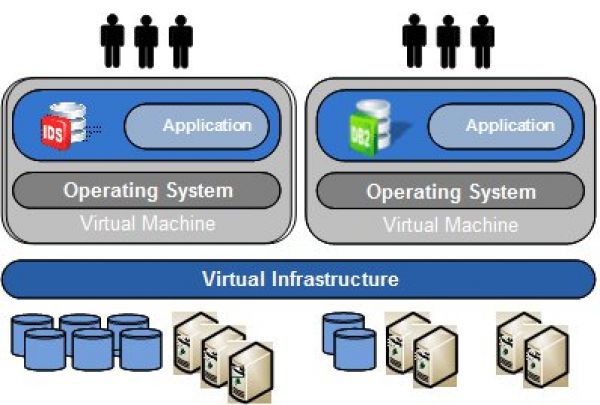
Virtualization will seep into every aspect of business computing over the next five years, growing tenfold as recession cost-cutting fades and mobilization of the workforces increase. Virtualizationwas perceived as useful, but expensive during the cost-cutting era before the recessionbegan to fade circa 2009, when just $500 million was invested in it. During therecession, it was still cheaper to tether workers to their desks and force themto work with inexpensive generic PCs. Now, however, businesses are jumping onthe visualization bandwagon not only to unshackle workers from their desktopPCs, but also to sidestep the security risks of mobile devices overapplications customized by IT for thin clients, tablets and smartphones.

According to ABI Research, the worldwide market for hosted VDI (virtual desktop infrastructure) will grow tenfold from 2009 levels to top $5 billion by 2016, with North America and Europe accounting for the bulk of the new installations.

Virtualization enables business partners to provide more comprehensive solutions to new and existing customers, as well as allowing companies to optimize IT investments, infrastructure and resources.

ABI Research's study, entitled "Desktop Virtualization: The Global Market for Virtualized Business Desktop PCs," concentrates on virtualization of desktop PCs, where their operating system, applications and databases are relocated to cloud computers, which then remotely deliver the same desktop experience as before to a secure laptop, netbook or other thin client, tablet or smartphone. Leading the charge in this category, according to ABI Research is Norton Ghost, Citrix XenDesktop and VMware View. Each of these solutions meets the demands of today's mobile workforce while ensuring high security that would be difficult to match with applications custom-made by IT.

"The VDI market will exhibit impressive growth in the next five years," said Larry Fisher, director, automotive, energy and emerging technologies, at ABI Research. "Buyers will principally consist of large enterprises looking to reduce their desktop support and management costs, and companies and organizations that need to lock data in the data center, either for compliance or security reasons, [allowing] the IT department to integrate a wide range of devices into corporate networks with relative ease [and providing] full corporate desktops through iPads, smartphones and other popular devices."

Other benefits include enhanced business continuity, lower overall energy expenditures for the smaller clients over desktop PCs, and enhanced recovery capabilities after disasters. High-end virtualization and cloud-computing providers like IBM cite four main reasons to adopt virtualization now: consolidation of resources to improve efficiency and business agility; easier management of variable workloads; the ability to automate processes to reduce management costs and provide more consistency; plus the ability to optimize delivery of services for faster responses to changing circumstances.

Further Reading

Monday, July 11, 2011

#CHIPS: "Freescale processors gain on-chip e-reader"


Earlier this year, Freescale Semiconductor Inc. announced the first line of processors designed to power sub-$99 e-readers. Now it has extended that line downward with integrated E-Ink driver circuitry for low-end devices from medical and home/office automation to watches whose face is an electronic paper display (EPD).
Further Reading

#ALGORITHMS: "Eight Touch-Screen Gestures That Increase Comprehension"


In the age of information overload, business agility requires optimal knowledge-acquisition techniques that psychologists call "active learning." These eight touch-screen gestures optimize active-learning techniques for electronic media and will be available in an app this fall The Georgia Institute of Technology has modernized traditional active-learning techniques for touch-screens by crafting a set of gestures for electronic media--including highlighting, commenting, extracting, collapsing, magnifying, linking, outlining and bookmarking.
Further Reading

Thursday, July 07, 2011

#ALGORITHMS: "CIOs Say Business Analytics Is Driving Growth"


Further Reading

An IBM poll of 3,000 CIOs reveals that business analytics, mobility solutions and virtualization are the top three priorities for increasing their enterprise's competitiveness.

A CIO survey reveals that harnessing business intelligence and analytics is by far the CIO's top priority for increasing competitiveness over the next three to five years. IBM surveys have polled the opinions of 13,000 CIOs worldwide over the last six years, revealing in their latest study that business analytics remains the top priority in enhancing the competitiveness of their enterprises.

"CIOs must understand the needs and goals of their organizations, agencies, divisions or business units, and deliver on their unique mandates," said the report. "The biennial IBM Global Chief Information Officer Study, reflects face-to-face conversations with over 3,000 CIOs from organizations of every size, sector and region."

A 76-page summary of the report's findings, entitled "The Essential CIO: Insights from the Global Chief Information Officer Study," is available free as a PDF.
According to the study, the top strategic technology investment CIOs recommend to enhance their enterprises' competitiveness over the next five years is business analytics, followed by mobility solutions and virtualization. Cloud computing, a distant concern for CIOs during the last iteration of the study in 2009, rose to tie for the fourth slot in 2011.

"To increase competitiveness, 83 percent of CIOs have visionary plans that include business intelligence and analytics, followed by mobility solutions (74 percent) and virtualization (68 percent). Since our 2009 Global CIO Study, cloud computing shot up in priority, selected by 45 percent more CIOs than before and leaping into a tie for fourth place with business process management (60 percent each)," said the study.
CIOs worldwide consider business intelligence and analytics the best methods of mining the nuggets of wisdom in their expanding data warehouses.

CEOs, in particular, are increasingly depending on the business intelligence and analytics managed by their CIOs as the best means of turning the raw data about their enterprise's performance into usable information resulting in intelligence CEOs can use to make informed decisions.

CIOs in midsized organizations deemed mobility solutions particularly important, according to a subset study, entitled "The Essential CIO: Midmarket CIO Study 2011."
"Trends such as the explosion of mobile shopping, the proliferation of smart phones, and the drive to better harness data through the social Web to drive results have transformed the way midsize firms do business," said that report.

CIOs with a mandate from their CEOs to expand their operations were more than double the size of any other group identified in the report (except for the financial-markets sector, which were predominantly operating under a "pioneer" mandate).
"Simply put, [expand] is what organizations today are asking for most often from their CIOs," said the report.

Beside business intelligence and analytics, CIOs at midsize enterprises with a mandate to expand identified process and product simplification as the drivers by which they planned to demonstrate fulfillment of their mandate. Nearly all CIOs in this group--98 percent--said they aimed to simplify key internal processes and 92 percent said they would drive better real-time decision making with business intelligence and analytics. Pioneer-mandate CIOs in midsized enterprises identified product/service profitability analysis as their top priority for turning raw data into actionable business intelligence.


Wednesday, July 06, 2011

#CHIPS: "Smarter Phase Change Memory Beats Flash"


Using a variety of solid-state memory technologies, IBM Research recently demonstrated a flash substitute that is 100 times faster and will last 3,000 times longer than the flash memory, which has replaced hard disks in everything from smartphones and touch-screen tablets to high-end enterprise servers and cloud-based data centers. Solid-state flash memory has largely replaced mechanical hard disks in mobile devices and even in high-performance server farms such as those at Answer.com, but now IBM has demonstrated a new, faster alternative to flash that lasts longer and can store four times as much information per bit-cell.

Flash memory has almost driven the hard drive makers out of business, with only two major manufacturers left, Seagate and Western Digital. However, hard drives have been hanging on because of the longevity of their spinning metal disks, which experience no wear since their read-write heads never touch the disk's surface. Flash memory, on the other hand, is faster to access, more compact and much lower power. Unfortunately, flash memory bit-cells wear out in as few as 3,000 cycles, making them suitable only for relatively short-lived mobile consumer devices (although server farms use them by monitoring their wear and implementing complex algorithms to map around bad cells until a point of diminishing returns when they have to be replaced.)

IBM's phase change memory test chip was fabricated in its 90-nanometer complementary metal oxide semiconductor (CMOS) process.

Now IBM scientists have demonstrated a solid-state alternative to flash memory that solves most of its problems, plus offers a clear migration path to higher performance, higher density and greatly expanded longevity. The key to this breakthrough memory technology--called phase-change memory--is its ability to store up to four-bits per memory cell. Flash memories have likewise, of late, started storing multiple bits per cell, albeit without solving its short lifetime problem.

"As organizations and consumers increasingly embrace cloud-computing models and services, whereby most of the data is stored and processed in the cloud, ever more powerful and efficient, yet affordable storage technologies are needed," states Dr. Haris Pozidis, Manager of Memory and Probe Technologies at IBM Research – Zurich. "By demonstrating a multibit phase-change memory technology which achieves for the first time reliability levels akin to those required for enterprise applications, we made a big step towards enabling practical memory devices based on multi-bit PCM."

IBM's innovation involves several architectural breakthroughs which together solve all the outstanding problems with flash while boosting its performance by 100-times. Phase change memories work in a manner similar to rewritable optical media, that is by heating and cooling a polymer so that it can take on two states--either crystalline (transparent) or amorphous (opaque). The difference with solid-state phase change memories is that these changes are performed electrically rather than with a laser as with optical disks.

By enlisting not only the phase change from crystalline to amorphous, but also the analog change in resistance of the electrodes between which the memory cells are sandwiched, IBM was able to encode four-bits per cell.

"We apply a voltage pulse based on the deviation from the desired level and then measure the resistance. If the desired level of resistance is not achieved, we apply another voltage pulse and measure again--until we achieve the exact level,” explains Pozidis.

Through this iterative process, the IBM scientists were able to demonstrate the longevity of their technique while simultaneously showing that even in the worst case access time will be no worse than 10 microseconds, which is still 100-times faster than flash.
Further Reading