ENERGY | WIRELESS | NANOTECH | MEMS | OPTICS | QUANTUM | 3D | CHIPS | ALGORITHMS

Wednesday, June 29, 2011

#MATERIALS: "Smartphone Materials Inspire Kyoto Prize Laureate"

The Kyoto Prize is the technology version of the Nobel Prize, awarded each year to three recipients in technology, basic science and philosophy/art. This year's recipient in advanced technology, National Institute of Technology scientist John Cahn, is estimated by NIST to be responsible for the development of more than 50 percent of the advanced materials in a modern smartphone.


Further Reading

National Institute of Technology materials scientist John Cahn was recently awarded the 27th annual Kyoto Prize for lifetime achievement in advanced technology.

Cahn's contributions to advanced materials science are routinely used in technological developments in renewable energy, computing, robotics, medicine, transportation and other technical fields. The Cahn-Hilliard equation, developed by Cahn with General Electric scientist John Hillard, continues to play a key role today in everything from advanced windshield materials that repel frost to the modern explanation of why uniform expanses of cosmic dust clump together into galaxies.
Later, Cahn incorporated an elastic strain energy term to extend the model into the third dimension, as well as laid the foundation for the modern theories of phase fields. As a result of his insights into thermal conductivity, pore permeability, heat resistance and magnetism, super-alloy properties have resulted in materials breakthroughs in metallurgy, physics, mathematics, chemistry, engineering, economics and demography.

NIST materials scientist John Cahn
Cahn began his career at GE before moving to the Massachusetts Institute of Technology and later to NIST. While at GE, he established himself as a pioneering thinker in the kinetics of nucleation, showing how thermodynamics governed phase transformations in solids.

At MIT, he extended the theories that explained the insights he observed while at GE, eventually creating the modern theory of phase transitions in metal alloys that led to the widely used Allen-Cahn equation, which he formulated with his graduate student Sam Allen. At NIST, Cahn further developed his theories of advanced alloy materials, establishing the modern theory of spinodal decomposition. Cahn is currently an Emeritus Senior Fellow at NIST and an affiliate professor at the University of Washington (Seattle).

Also receiving the Kyoto Prize this year was astrophysicist Rashid Sunyaev, a citizen of both Russia and Germany, who will receive the award for discovering that fluctuations in cosmic microwave background radiation can be used to look back in time at the origins of our expanding universe.

The Inamori Foundation--created by the founder of technology conglomerate Kyocera Corp. (Kyoto, Japan)--awards each Kyoto Prize laureate $625,000 in cash along with a solid-gold medallion studded with eight perfect precious stones that were grown from scratch in Kyocera's semiconductor ovens--four emeralds of 4 to 12 carats each and rubies of nearly 7 carats each.

Tuesday, June 28, 2011

#ENERGY: "Boosting efficiency may require 'cool factor'"

The Smart Energy Panel at the Freescale Technology Forum held here last week addressed the issue of smarter energy efficiency by asking its panelists to expound on the question: What is the biggest hurdle to action?


Smart Energy experts consisted of (from left): moderator Freescale's own senior vice president, Henri Richard, professor Brewster McCracken executive director of The Pecan Street Project, founder of KLD Energy Technologies, Christen Okonsky, Duke Energy director of advanced consumer technology Mike Rowand, and Jun Shimada, president and CEO of ThinkEco Inc.
Further Reading

#ALGORITHMS: "Enterprise App Stores Harness HTML5"


The Volt client application allows enterprises to authenticate their employees' mobile devices from the cloud-based Antenna Mobility Platform from which universal HTML5 applications are provisioned.

Software developers used to have to rewrite their apps for each platform they serve, duplicating their efforts for Apple's iOS, Google's Android, RIM's BlackBerry Playbook and Hewlett-Packard's webOS, but no more. Now, enterprise IT can provide universal HTML5 apps provisioned from cloud-computing resources to serve employees, regardless of platform.

The application community is sidestepping mobile-device vendors' application stores by providing universal HTML5 applications that users can't tell from a normal application.
The "Financial Times" rocked the application community recently by sidestepping mobile-device vendors' application stores by providing universal HTML5 applications that users can't tell from a normal application.

After downloading, the HTML5 application remains in local cache memory even after the user goes offline. When harnessed by enterprise IT, these new universal HTML5 applications can be provisioned and managed using cloud-computing resources.

IT organizations serving their employees with such universal HTML5 applications can harness built-in authentication and security apparatuses that keep data private while simultaneously preventing applications from becoming avenues for intrusions. For instance, Volt from Antenna Software provides cloud-computing resources that manage all the infrastructure details that put enterprise managers in direct control of their employees' HTML5 applications regardless of the mobile device they are using.

Further Reading

Monday, June 27, 2011

#SECURITY: "Blacklist Aims to Block Telecom Fraud"

The hacking/phreaking culture lures the brilliant and best to waste their talents on cyber-attacks that thumb their noses at civil society, or worse, perpetrate outright theft, prompting the formation of a community blacklist to restore order. While the bulk of the publicity on today's hacking/phreaking culture focuses on cyber-intrusions into online computers, a growing threat also comes from phreaking attacks on telecommunications systems where fraud not only inconveniences phone-system users, but also fleeces them financially. With technological solutions fighting a losing battle, 'community blacklisting' emerges as a necessary evil.

Humbug's Statistics Dashboard (top) provides analytics and reporting for voice networks including total calls, duration, average success rate (ASR), average call durations (ACD), cost summaries and caller leaderboards. Traffic Visualizations (bottom) of both inbound and outbound traffic use graphs and maps that can be zoomed-in on specific countries or phone numbers.
Further Reading

Friday, June 24, 2011

#ALGORITHMS: "Smarter Task-Transfers Use Mobile Cameras"


MIT and Google have devised a method of transferring tasks between your smartphone and your computer by merely pointing the cell-phone camera at your PC's screen. How many times have you found a Web page on your smartphone that you want open on your desktop computer? Or perhaps you were viewing your destination on Google Maps and want to transfer that to your smartphone. Using an experimental app called Deep Shot, you can do these things by merely aiming your smartphone's camera at your computer.
Further Reading

#MATERIALS: "NIST materials scientist awarded Kyoto Prize"


The Kyoto Prize winners this year include material scientists pioneer John Cahn, now an emeritus Fellow at the U.S. National Institute of Standards Technology (NIST). Cahn's numerous contributions to the science of metallurgical alloys--including the co-authorship of the seminal paper explaining quasicrysals--are widely used in semiconductors, robotics, medicine and transportation. The other two Kyoto Prize Laureates for 2011 include the winner in Basic Sciences, Rashid Sunyaev, a Russian astrophysicist with co-citizenship in Germany, who proposed the theory that fluctuations in cosmic microwave background radiation could be used to look back into time at the origins or our expanding universe. And in Arts and Philiosophy, this year's Kyoto Prize Laureate is Tamasaburo Bando V, a Japanese theater performer and Kabuki actor specializing in female roles, who has become world renowned a creator of elegant beauty that has influence many artistic genres. The Kyoto Prize Laureate will be officially honored in Japan on Nov. 9th, each receiving a 20-karat-gold medallion and $625,000. The ceremony and gala will be repeated in the U.S. in San Diego. Calif. on March 20-22, 2012.
Further Reading

Thursday, June 23, 2011

#ALGORITHMS: "Pizza Analytics Serves Bigger Slice of Pie"


IBM analytics can use data from nearly any source, from pizza ordering patterns to text sources like social media. (Source: IBM)

Business analytics is not what many think of when ordering pizza, unless perhaps when using Papa Gino's mobile app to take advantage of personalized special offers, ready in 30 minutes. Papa Gino's, a New England pizza chain, has boosted its average order total while simultaneously upping the frequency of orders per customer by turning to real-time analytics. The analytics effort was done through a collaborative venture with QueBIT Consulting, a business partner of IBM.

In the past, Papa Gino's was able to boost the average order total by virtue of customer loyalty programs. The programs rewarded customers who signed up with special offers encouraging them to add on additional items. Likewise, the pizza maker was able to boost the frequency of ordering by offering free downloadable apps for smartphones that made it easier for customers to place orders. However, it took business analytics to help unearth a formula that increased both total orders and their frequency, simultaneously.

One surprising factor that the company claims it would never have thought of on its own is how personalized special offers are delivered. Analytics revealed that 80 percent of pizza lovers in New England prefer to have personalized special offers delivered by text messages, rather than email or from in-app offers. Another example is that frequent customers prefer the freedom to redeem these offers for take-out or dine-in pizzas. As a result of these and other previously hidden trends among its loyal mobile customers, ordering frequency has been boosted, along with an average increase of order totals by 50 percent.

Medium-sized businesses like Papa Gino's--with 280 restaurants including its D'Angelo grilled sandwich shops--might have thought they were too small to harness business analytics being run on IBM's massive cloud computers, but by working with QueBIT, the chain has been able to reap a positive return on investment (ROI) right out of the (pizza) box.

"Being able to track and analyze customer feedback and response [has] grown our transaction count significantly as more and more people join our rewards program," said Paul Valle, CIO of Papa Gino's. "[These trends are] not something we would have been able to tell as easily [without analytics]."

Instead of spending 80 percent of their time just gathering data, and only 20 percent analyzing it as Papa Gino's did in the past, according to Valle, now management can spend the bulk of their time on analytics.

For the future, the pizza chain plans to begin minimizing labor costs with predictive analytics that match staff scheduling to projected customer demands throughout the chain. And if that goes well, Papa Gino's plans to extend analytics to tracking store inventories and all the other important aspects of pizza making, from hand tossing to boxing the pie.

Further Reading

Wednesday, June 22, 2011

#SECURITY: "Smarter Security Screening Hands-Free"


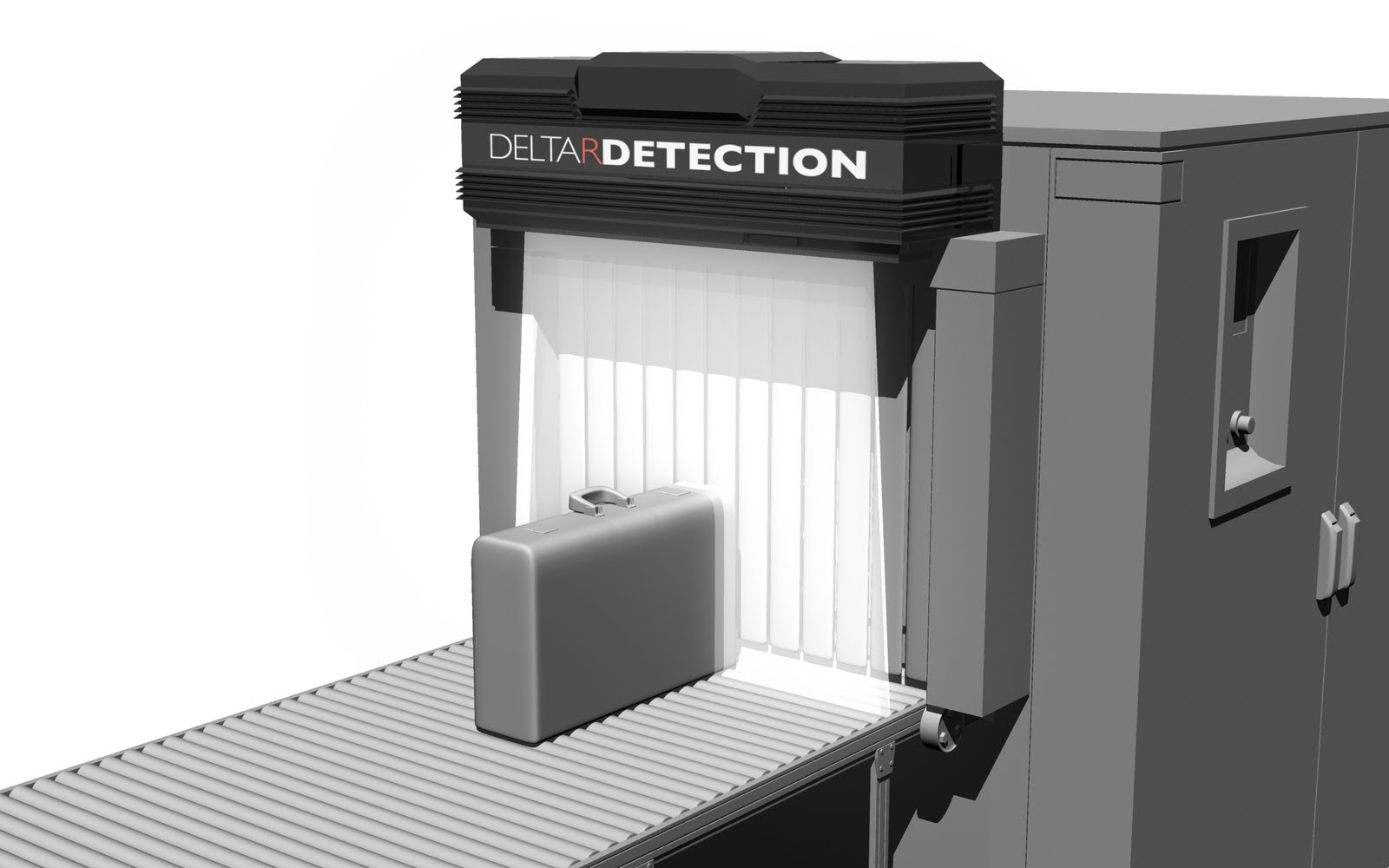
A smarter, yet relatively inexpensive, security screening technology requires no human intervention to detect explosives, according to its developers. Recall how psychedelic black lights make tiny particles glow that are invisible in normal illumination. Now researchers at the University of Florida have patented a similar method that automatically detects the tiniest traces of explosives using harmless UV (ultra-violet) lights similar to black lights.

The TSA (Transportation Security Administration) has created a $3 billion market for sophisticated screening equipment, and yet a printer cartridge filled with explosives, originating in Yemen and bound for the United States, was only intercepted in Dubai by virtue of a tip to intelligence services. Now a University of Florida invention, which is currently being commercialized by Delta R. Detection, is claimed by its inventors to be able to automatically detect and flag explosive laden cargo, including that U.S.-bound printer cartridge.

"Nobody has tried this before us," said Thierry Dubroca, a University of Florida postdoctoral research associate who is also the CEO of the Delta R. Detection startup now gearing up to license the patented technology. Its first licensee, Proxitronic Industries AG, will manufacture the scanner for use in Europe and by the TSA in the United States.

More than 625 million people travel annually on commercial aircraft after having their baggage screened by x-rays, metal detectors and millimeter-wavelength scanners that pinpoint objects inside their bags or under their clothing. The most sensitive detectors today use spectrometry, but require the surface of cargo to be swabbed with a liquid that picks up particles, or "puffed" with air to dislodge particles from bags. The University of Florida technique, on the other hand, can be used without touching bags or people as they go by, even when there are no operators present.

Called “differential reflectometry” by its inventors, which include professors Rolf Hummel (emeritus) and Paul Holloway at University of Florida (both now members of the management team at Delta R. Detection), the technology requires no human operators. “The goal for our technology was to make speedy decisions at security checkpoints and to minimize the involvement of human beings," said Hummel

By shining a harmless UV black-light on luggage as they move past on a conveyor belt, or on people as they walk through a portal, completely automated detection can be implemented. Scanning the reflected light for specific frequencies reveals the chemical makeup of any detected residues. Each type of explosive has a specific type of emission spectra, a unique fingerprint, which algorithms can update as new types of explosives are utilized by terrorists. If any such fingerprints are detected, an alarm is sounded to alert nearby security personnel.

The patented technology was developed with $1.4 million in federal, state and private money.

Further Reading